
| Page: |
| Home > Technical Chat > Exhaust Manifold Design Considerations | |||||||
 1424 Posts Member #: 2810 Formally spanner181187 Dublin, Ireland |
7th Sep, 2008 at 05:31:43pm
Myself and Paul will hopefully be starting work on my exhaust manifold this week. I am still having some thoughts about the design and hope someone can shed some light.
Edited by GaryOS on 7th Sep, 2008. On 12th Nov, 2009 Paul S said:
I think Gary OS has taken over my role as the forum smart arse  On 30th Apr, 2010 Rod S said:
Gary's description is best |
||||||
|
1303 Posts Member #: 30 Post Whore Epsom, Surrey |
7th Sep, 2008 at 05:50:32pm
i like the idea of equal lenght branchs on the exhaust manifold, but is it worth the effort on a 5 or 7 port head?
|
||||||
|
1424 Posts Member #: 2810 Formally spanner181187 Dublin, Ireland |
7th Sep, 2008 at 05:59:42pm
Thanks Turbo Shed. I am aware of the other two manifolds but as you say, why not try something new?
Edited by GaryOS on 7th Sep, 2008. On 12th Nov, 2009 Paul S said:
I think Gary OS has taken over my role as the forum smart arse On 30th Apr, 2010 Rod S said:
Gary's description is best |
||||||
 4559 Posts Member #: 786 Post Whore Bermingum |
7th Sep, 2008 at 06:00:37pm
Hi,
VEMs Authorised Installer / Re-seller. K head kits now available!
|
||||||
 8604 Posts Member #: 573 Formerly Axel Podland |
7th Sep, 2008 at 06:02:08pm
In theory there would be some hp gain by keeping the ports equal length.
Saul Bellow - "A great deal of intelligence can be invested in ignorance when the need for illusion is deep."
|
||||||
|
1424 Posts Member #: 2810 Formally spanner181187 Dublin, Ireland |
7th Sep, 2008 at 06:03:42pm
Bat, is that due to the fact that the pulses will be pointing at different angles relative to the impellor, therefore making the distance of each branch to the impellor different? Or is it due to the turbulence among pulses once they join at the turbo flange ? On 12th Nov, 2009 Paul S said:
I think Gary OS has taken over my role as the forum smart arse On 30th Apr, 2010 Rod S said:
Gary's description is best |
||||||
|
4559 Posts Member #: 786 Post Whore Bermingum |
7th Sep, 2008 at 06:06:56pm
Hi,
VEMs Authorised Installer / Re-seller. K head kits now available!
|
||||||
|
152 Posts Member #: 1074 Advanced Member Northamptonshire |
7th Sep, 2008 at 06:09:13pm
I would have thought that by far the most important aspect is to separate the inner port from the outer ones on a 5 (or 7) port head thus preventing interference during blowdown.
|
||||||
|
8604 Posts Member #: 573 Formerly Axel Podland |
7th Sep, 2008 at 06:11:38pm
On 7th Sep, 2008 Bat said:
Hi, Even with equal length runners on any engine the pulses will not all arrive at the turbo at the same time, so what difference will it make? Cheers, Gavin :) You realy want the pulses arriving at 180 degree equivalent intervals, not at once. With the Metro they probably arrive 120/240/120/240. Saul Bellow - "A great deal of intelligence can be invested in ignorance when the need for illusion is deep."
|
||||||
|
1424 Posts Member #: 2810 Formally spanner181187 Dublin, Ireland |
7th Sep, 2008 at 06:31:32pm
Thanks Paul, I suppose I have been equating this manifold design to a tuned length LCB On 12th Nov, 2009 Paul S said:
I think Gary OS has taken over my role as the forum smart arse On 30th Apr, 2010 Rod S said:
Gary's description is best |
||||||
|
152 Posts Member #: 1074 Advanced Member Northamptonshire |
7th Sep, 2008 at 06:46:38pm
I agree that it would probably be better to have the pipes the same length but it would not be as significant as separating them. (hence the design of the standard manifold)
|
||||||
|
444 Posts Member #: 2885 Senior Member |
9th Sep, 2008 at 06:40:39pm
The point of seperating exhaust pulses is to reduce lag because the individual 'puffs' from each cylinder are more effective than a constant 'puff' at acelorating the turbine wheel from standstill. That is almost a word for word quote from ForcedInductionPerformaceTuning Book..
|
||||||
 85 Posts Member #: 2234 Advanced Member Palm Beach Gardens, Florida |
9th Sep, 2008 at 10:22:59pm
haven't built one myself. The ones I have seen custom-made weren't on Minis, but on those, the fabricator made an effort to bring the pipes into a collector so that the pulses arrived in the same order as would contribute to turbo rotation. I don't see how to do that on a Mini 5 port head.
|
||||||
 189 Posts Member #: 1774 Advanced Member Sydney AUS |
10th Sep, 2008 at 12:38:40am
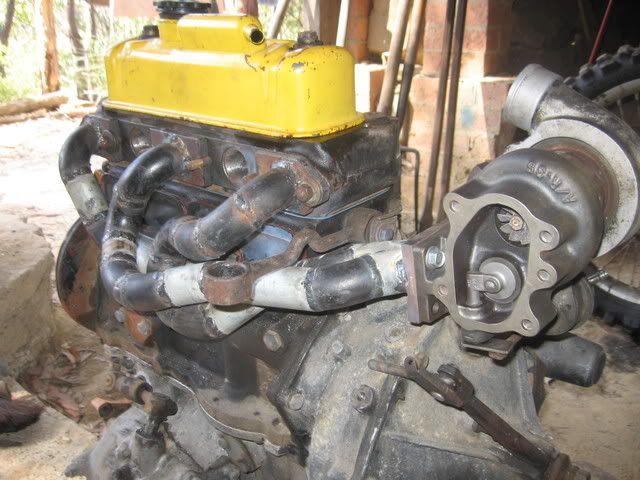
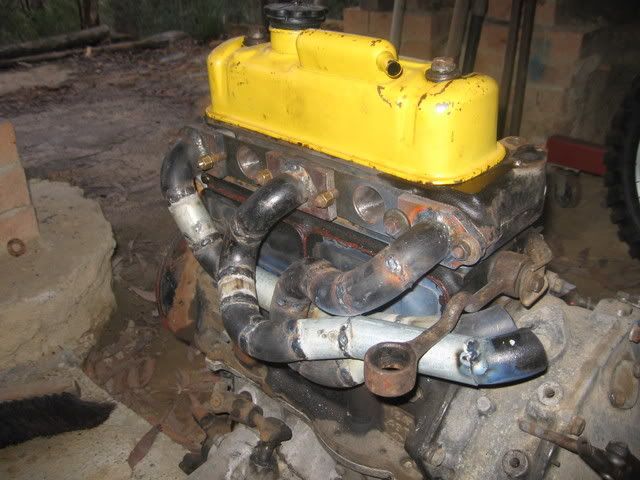
Mine happens to have equal length runners on my 5 port... no idea if it helps or not, because I have not tried an alternative manifold. To make this one was a nightmare though...
Edited by pristic on 10th Sep, 2008. 1132cc Turbo ~120 bananas ATW - Fun Fun Fun
|
||||||
|
591 Posts Member #: 360 Stu from Corwall aka Mr Jazz Piano, Love_Machine, kneegrow |
10th Sep, 2008 at 11:15:29am
That's a beautiful manifold.
Bugger off, I'm getting there. |
||||||
|
1424 Posts Member #: 2810 Formally spanner181187 Dublin, Ireland |
10th Sep, 2008 at 03:08:53pm
On 10th Sep, 2008 Hedgemonkey said:
Bearing in mind fluid flow is about the most complicated area of maths and an exhaust manifold is going to really be very complex explaining every last wiggle of the graph. I'd just whack it on and go for it. That seems to be the general consensus here. I'm starting to regret sleeping through all my thermo/fluid dynamics lectures last year Edited by GaryOS on 10th Sep, 2008. On 12th Nov, 2009 Paul S said:
I think Gary OS has taken over my role as the forum smart arse On 30th Apr, 2010 Rod S said:
Gary's description is best |
||||||
|
444 Posts Member #: 2885 Senior Member |
17th Sep, 2008 at 11:08:32pm
that shit needs to be heat wrapped pristic big time! |
||||||
|
189 Posts Member #: 1774 Advanced Member Sydney AUS |
18th Sep, 2008 at 01:47:08am
Hey Hario, no heat probs at all with it mate.
1132cc Turbo ~120 bananas ATW - Fun Fun Fun
|
||||||
|
444 Posts Member #: 2885 Senior Member |
18th Sep, 2008 at 07:45:02pm
I work at a thermal spray company and we recently coated some rollers for a textile company with something ceramic, it was for wear resistance not heat retention but still the ceramic powder that we coat with was £45 per kg. and we used about 2kg. per meter per roller"!
|
||||||
| Home > Technical Chat > Exhaust Manifold Design Considerations | |||||||
|
|||||||


| Page: |